Server side tracking by default
Every account ships with the Conversions API and a server-tag setup. You measure what actually converts, not what iOS 14 lets you see.
Also available
Most agencies still rely on the browser pixel. We engineer the full attribution loop — CAPI, server side tagging, deduplication — so Meta can actually find your customers.
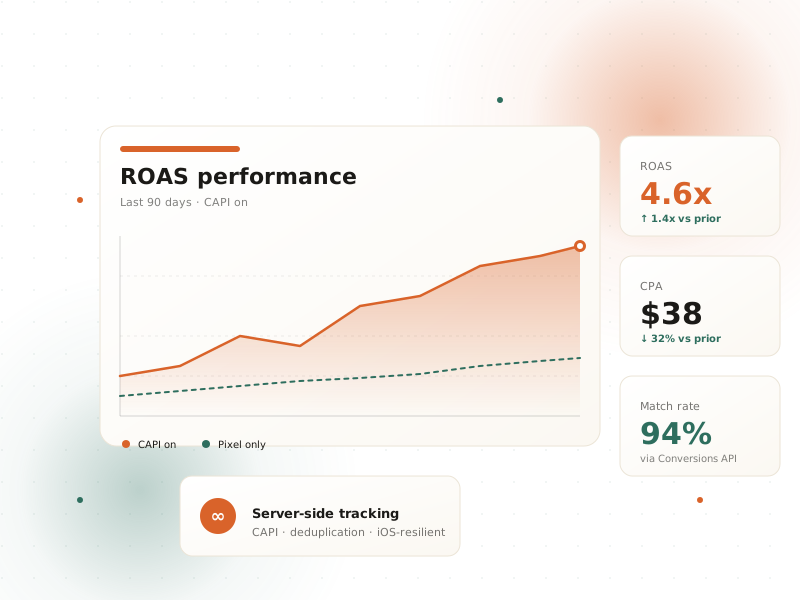
Every account ships with the Conversions API and a server-tag setup. You measure what actually converts, not what iOS 14 lets you see.
We write hooks tied to your booked-job math, not a stock library of swipes. Static, motion, and UGC variants tested weekly.
Audiences, placements, and budgets reviewed every week. Slow-bleeding ad sets killed inside seven days, not at month-end.
Dashboards show booked appointments, won deals, and revenue — not just clicks. CRM data flows back into Meta for better lookalikes.
Step 1
We review your current pixel, account structure, spend, and attribution gaps before we touch anything.
Step 2
We set up the Conversions API, server side tagging, deduplication, identifier hashing, and the consent layer.
Step 3
We ship hooks tied to your booked job math and run a parallel period to validate event match quality.
Step 4
Audiences, budgets, and creative are reviewed every week, with slow ad sets cut inside seven days.
Read the full breakdown of why the Meta Conversions API is now mandatory for scale, or see how we wire tracking and automation end to end for clients.
Service businesses spending $5k–$60k/month on Meta who need attribution they can defend, not a dashboard that shows clicks.
Audit my Meta account